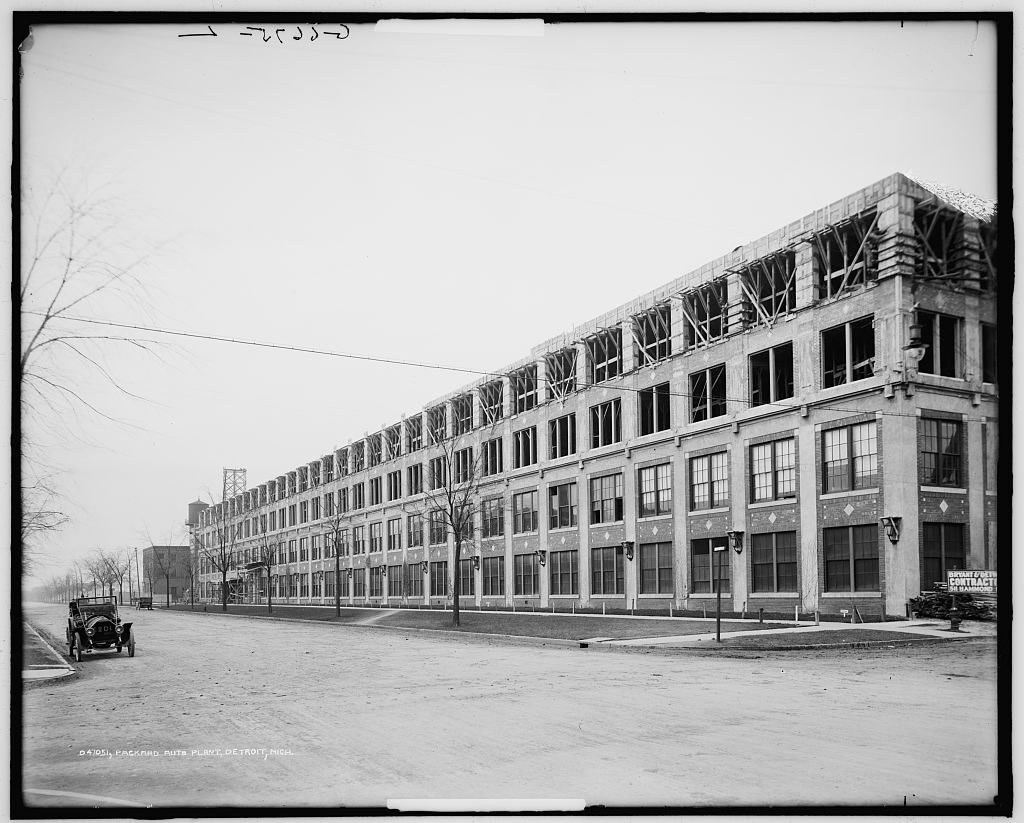
Source: Detroit Publishing Co. / source record · No known restrictions on publication
Detroit's industrial history is not only a story of automobiles. It is a story of machine shops, tool rooms, stamping plants, assembly lines, rail yards, river docks, suppliers, skilled trades, shift whistles, union halls, wartime production, and neighborhoods built around work.
This room studies the industrial city as a system: people, plants, transportation, labor, production, housing, policing, and the daily rhythms that made mid-century Detroit function.
The diagram is interpretive rather than archival. Use it as an orientation to Detroit's industrial system, then enter the deeper rooms for plants, rail corridors, workers and wartime production.
Automakers, suppliers, stamping, machining, assembly, engineering, and the enormous industrial ecosystem that extended far beyond a single plant.
OPEN FACTORY FILE →The precision trades behind mass production: dies, fixtures, machining, apprenticeship, process planning, maintenance, and the skilled labor that kept factories running.
ENTER THE TOOL ROOM →Automotive capacity redirected toward wartime production, reshaping factories, labor demand, commuting, housing, and the scale of industrial Detroit.
OPEN WAR PRODUCTION →Organizing, bargaining, shop-floor authority, grievances, strikes, wages, seniority, and the evolving relationship between workers and management.
OPEN LABOR FILE →Time clocks, shift changes, cafeterias, taverns, buses, parking lots, paydays, factory gates, and the daily routines surrounding industrial employment.
CLOCK IN →Raw materials in, finished goods out: rail corridors, docks, trucks, warehouses, sidings, and the transportation network behind production.
OPEN LOGISTICS FILE →Migration, women in wartime industry, skilled trades, production workers, supervisors, engineers, and the changing workforce behind Detroit's industrial expansion.
OPEN WORKFORCE FILE →Plants affected where people lived, how they traveled, where commercial strips grew, and how working-class neighborhoods developed around industry.
OPEN NEIGHBORHOOD FILE →Factories and freight created concentrations of people, vehicles, goods, cash, and movement—important context for understanding policing and historical crime without sensationalizing it.
OPEN POLICING LENS →Ralph Palmer's documented industrial and engineering background gives the site a human connection to this larger Detroit story. His Ford Apprentice School and engineering records can anchor that thread while the broader section remains about Detroit—not a substitute for the books.
FORD APPRENTICE SCHOOLENGINEERING & INDUSTRYINDUSTRY ARCHIVEDetroit's factories, labor history, wartime production, skilled trades, worker neighborhoods, transportation systems, and industrial geography can be explored deeply. If an industrial detail intersects a Ralph Palmer case or book narrative, the website provides context and archival proof without revealing the complete story.
CONTINUE IN THIS CATEGORY