Two cities facing one another.
Detroit and Windsor sit unusually close across an international border. That proximity made the river a route for workers, travelers, commerce and families as well as a legal boundary between two countries.
For historical research, the border changes the questions. A trip that looks short on a map could involve customs, immigration rules, different police jurisdictions and records created on either side of the water.
Water, bridge, tunnel and rail.
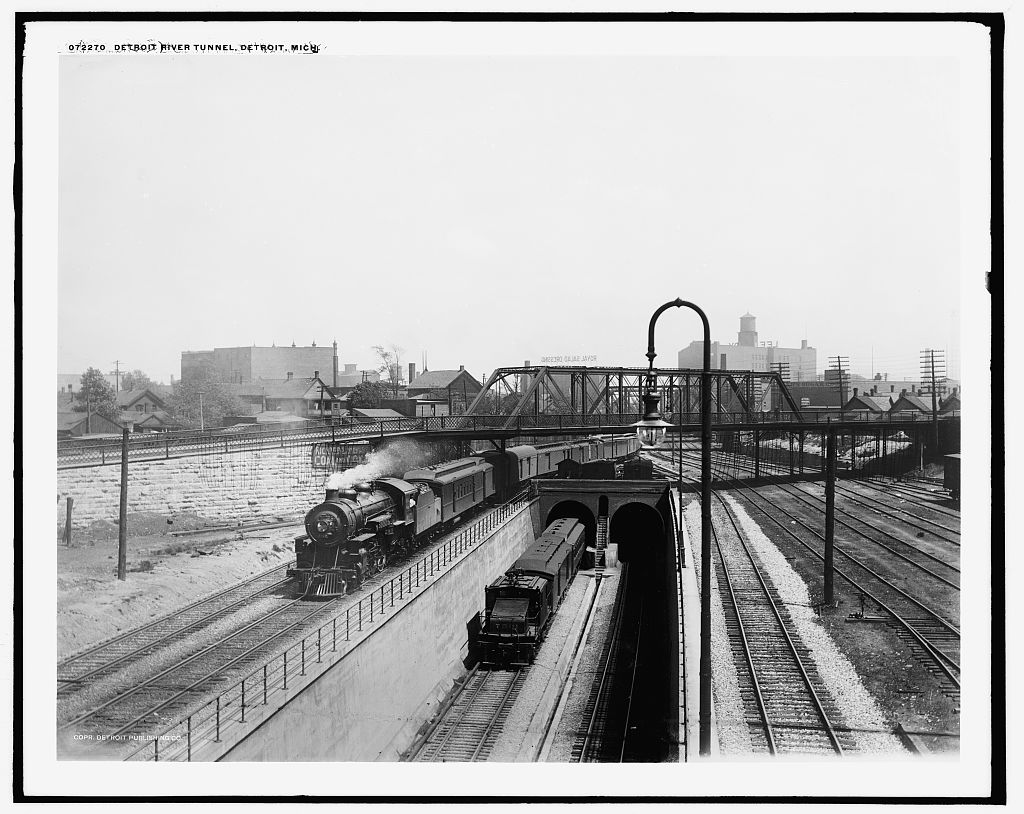
Before permanent automobile crossings, ferries and other boats carried people and goods between the two shores. The Ambassador Bridge opened in 1929, followed by the Detroit–Windsor Tunnel in 1930. Rail traffic also passed beneath the river. Each crossing created its own pattern of movement, inspection and recordkeeping.
One short crossing, several jurisdictions.
Detroit police, customs officials, immigration authorities and Canadian agencies did not hold identical powers or responsibilities. Border history therefore requires careful attention to which agency acted, where an event occurred and what documentary trail may have survived.
Movement created opportunity.
Prohibition made the closeness of Canada impossible to ignore. The same geography that supported legitimate trade could also be used for illegal liquor and other smuggling. Later decades changed the commodities and methods, but the international boundary remained part of Detroit’s crime and policing environment.
This public layer explains the border city without opening the investigations preserved for The Ralph Palmer Chronicles.
Solve Monthly Crime 01 · The Missing Shield · Final Evidence
Close the gap in the record.
The surviving personnel chronology places Ralph Palmer’s detective examination in 1951. His transfer to the Hold-Up Bureau came in February 1953.
The missing promotion falls in the single calendar year between them.