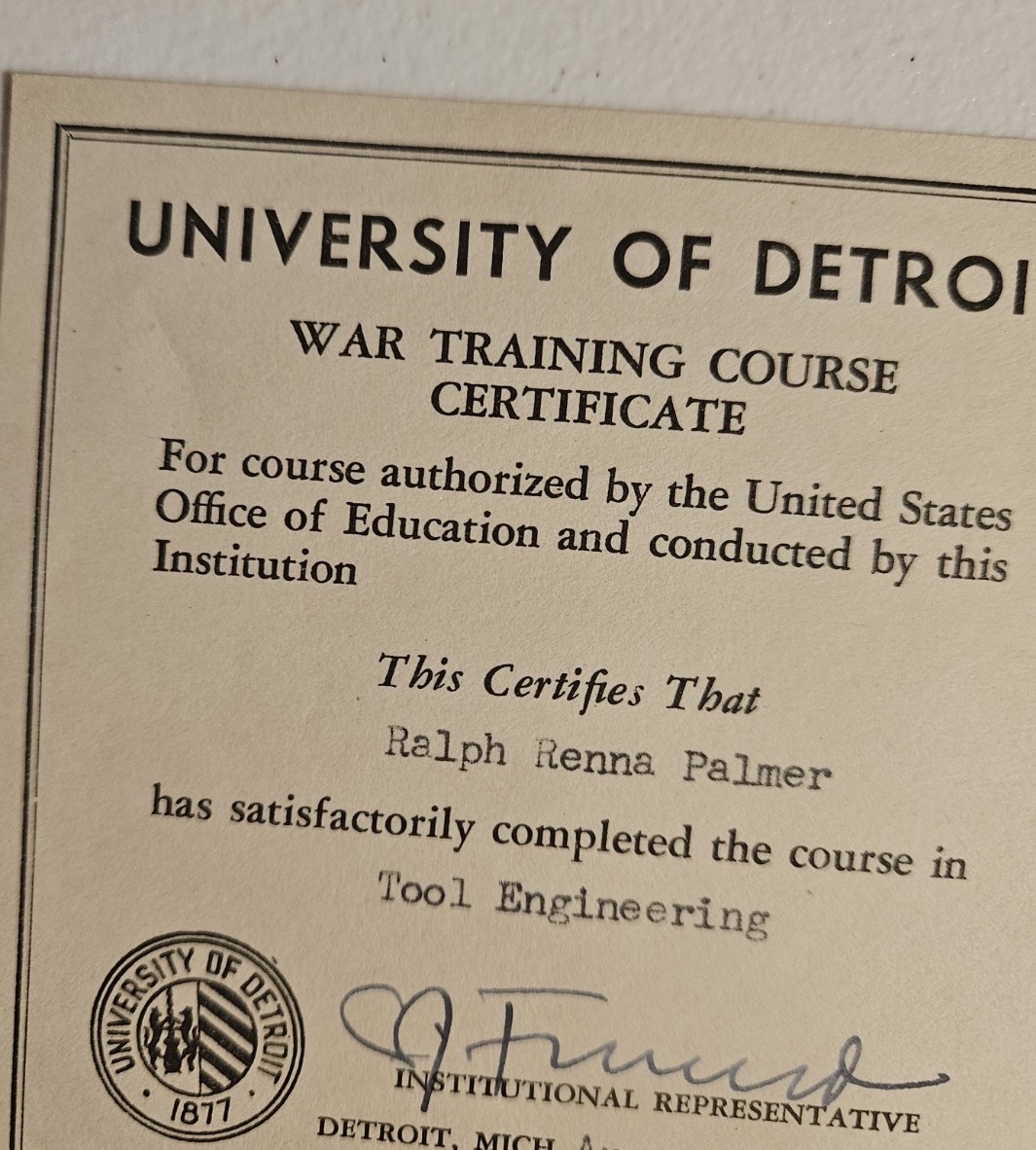
Mass production depended on precision work long before a finished automobile reached an assembly line. Tool-and-die makers, machinists, process planners, pattern makers, maintenance workers, and other skilled trades built and maintained the equipment that made high-volume manufacturing possible.
Tool-and-die work sat behind mass production. Dies shaped metal; jigs and fixtures held work in position; machinists and toolmakers translated drawings and measurements into the equipment that allowed thousands of parts to be made to the same specification.
Ralph Palmer’s Ford Apprentice School training belongs here as one documented example of Detroit’s skilled-trades culture. The website uses that record to place him in the industrial city without turning this room into a résumé.
CONTINUE IN THIS CATEGORY