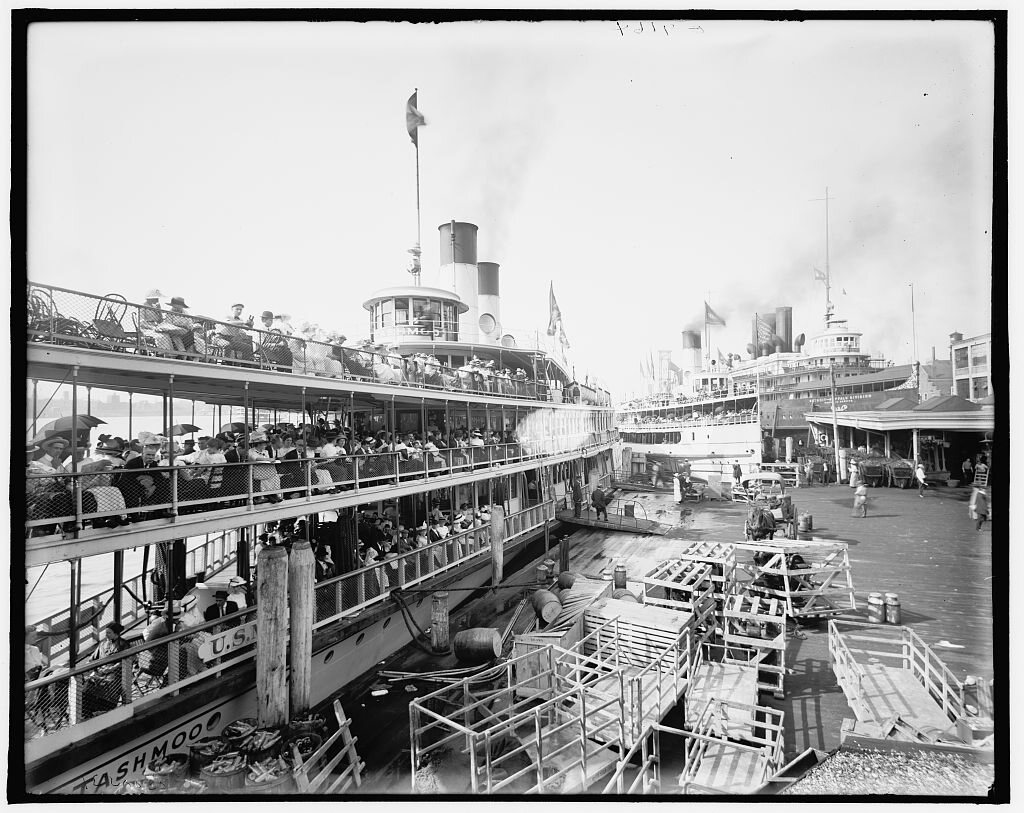
Source: Detroit Publishing Co. / source record · No known restrictions on publication
Production required constant movement. Steel, components, machinery, fuel, and finished goods traveled through rail yards, sidings, roads, warehouses, docks, and the Detroit River corridor. Industrial geography and transportation geography were inseparable.
Rail yards, industrial sidings, docks, warehouses and truck routes connected Detroit’s plants to raw materials and distant markets. The industrial city was therefore also a logistics city, with freight movement shaping the riverfront, factory districts and major corridors.
When this site connects a plant, warehouse, rail line or dock, the relationship should be visible on a period map or supported by a contemporary record. Geography is evidence here, not decoration.
CONTINUE IN THIS CATEGORY