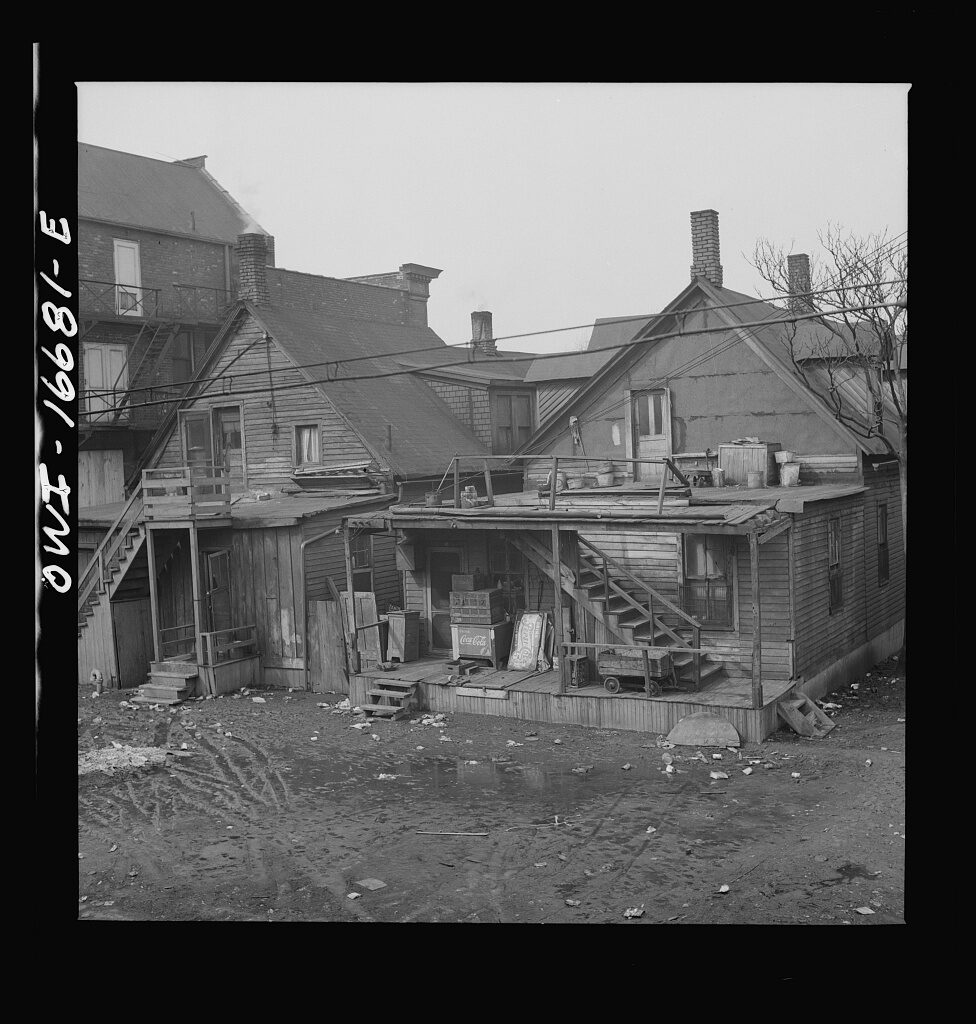
Source: Arthur S. Siegel / source record · Public domain — FSA/OWI
Plants influenced where housing expanded, where commercial corridors thrived, how workers commuted, and how neighborhoods experienced noise, traffic, smoke, employment opportunity, and industrial land use.
Detroit’s industrial growth placed factories, worker housing, commercial strips and transportation corridors within the same urban landscape. A plant could shape the rhythm of nearby streets even when the people living there worked somewhere else.
Maps, directories and photographs help show how industrial land use met residential Detroit. That relationship matters to the history of work, transportation, policing and neighborhood change.
CONTINUE IN THIS CATEGORY