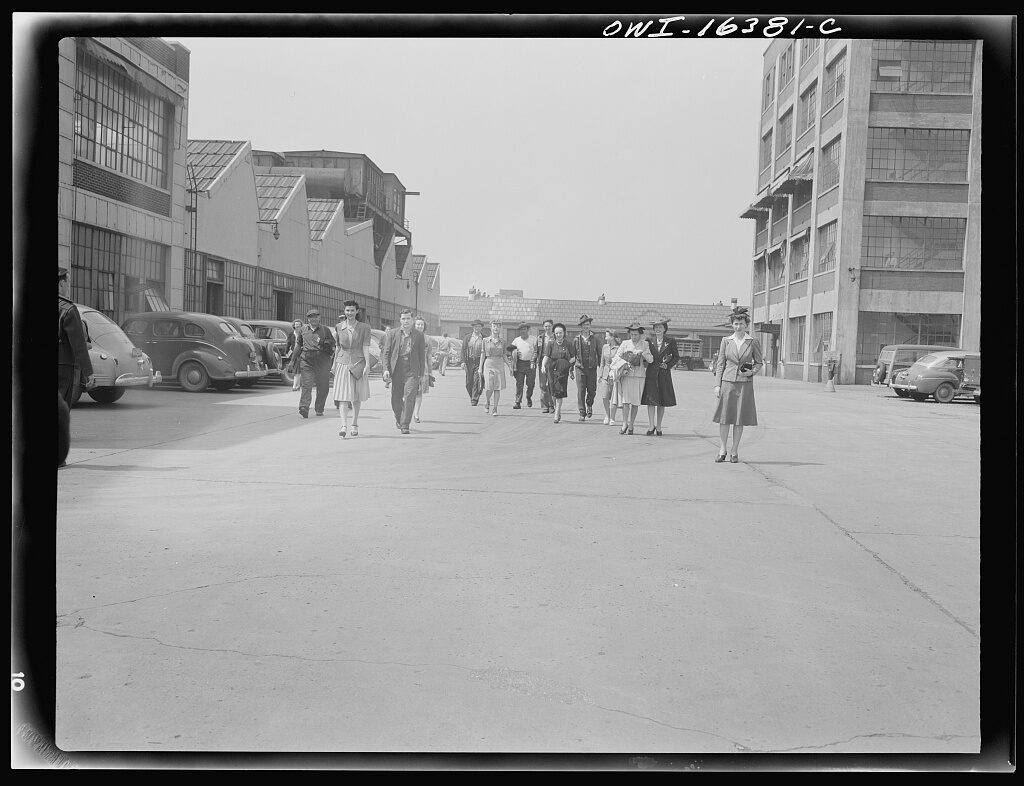
Source: Arthur S. Siegel / source record · Public domain — FSA/OWI
Factories operated on schedules that reordered the city around them. Shift changes affected street traffic, transit ridership, restaurants, taverns, parking, neighborhood commerce, household routines, and police activity.
Industrial Detroit moved in waves. Shift changes concentrated workers at plant gates, on streetcars and buses, in parking lots, diners, stores and taverns. The workday influenced when streets filled, when businesses opened and when neighborhoods changed character.
A shift schedule is more than workplace detail. It helps explain traffic, public transportation, neighborhood business and the hours in which police, fire and other city services encountered a moving industrial population.
CONTINUE IN THIS CATEGORY