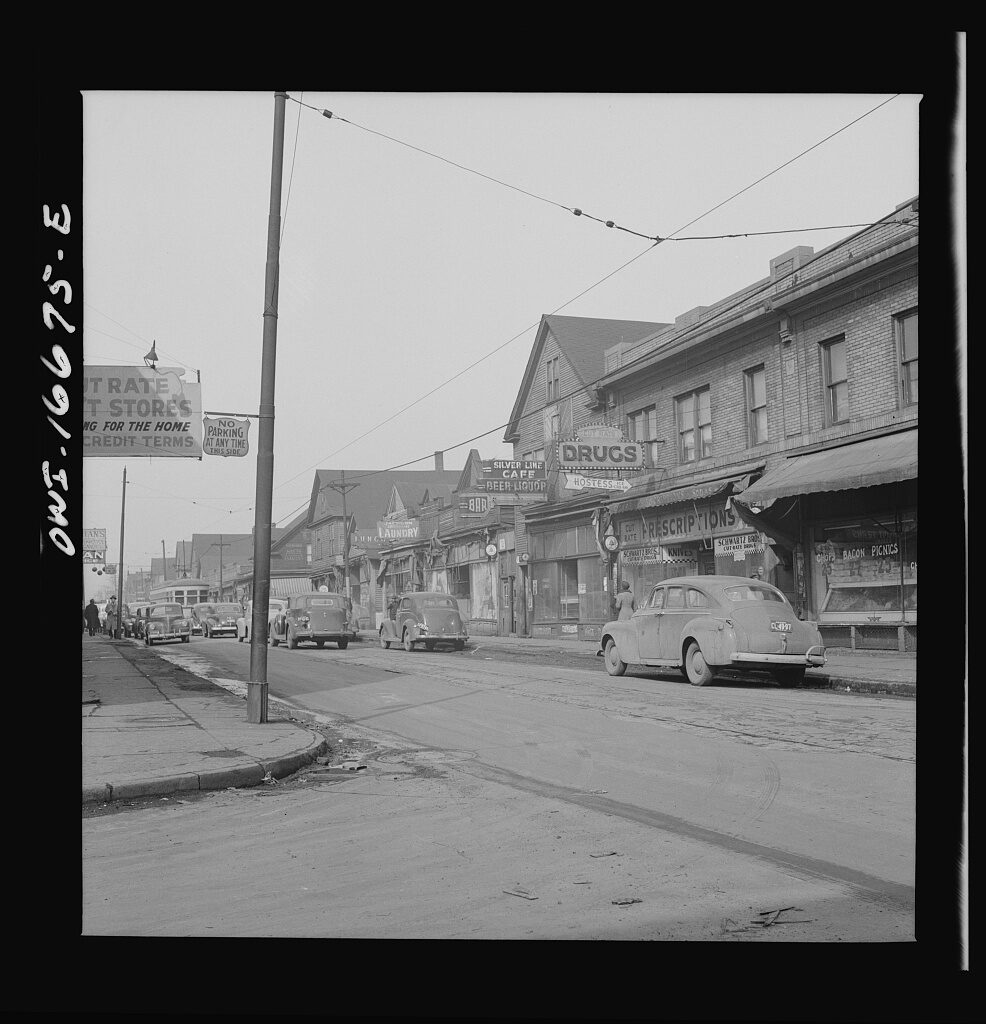
Robbery is a crime against a person as well as a property offense. In a large industrial city, the practical questions include where money moved, when businesses opened and closed, how offenders approached and escaped, what witnesses could actually see, and how quickly descriptions reached patrol officers.
Small businesses, taverns, stores, workers carrying cash, and other cash-handling environments could present different opportunity structures.
Opening and closing hours, darkness, shift changes, weekend activity, and street traffic change both opportunity and witness conditions.
A vehicle can expand the distance between offense and arrest. Street grids, major arteries, bridges, and jurisdictional boundaries matter.
Stress, lighting, distance, duration, disguise, and repeated retelling can affect eyewitness accounts. A lineup is investigative evidence, not magic certainty.
Before digital dispatch and searchable databases, speed depended on calls, radio, call boxes, patrol knowledge, bulletins, telephone work, and human memory.
A newspaper headline can establish that an incident was publicly reported. Police records, court records, witness accounts, and later reporting may answer different questions and may not agree in every detail.
CONTINUE IN THIS CATEGORY