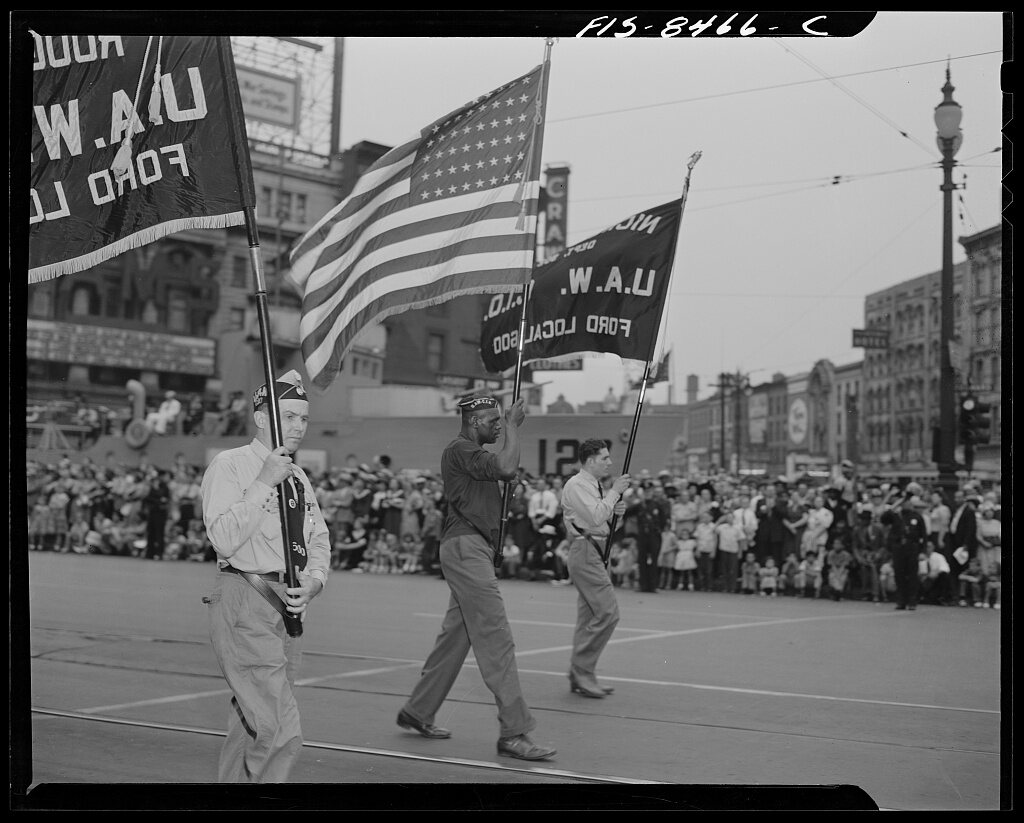
Source: Arthur S. Siegel / source record · Public domain — FSA/OWI
Industrial Detroit was also a labor city. Union organization, collective bargaining, wages, seniority, shop-floor rules, grievances, strikes, management authority, and workplace safety all shaped the social history of the factory system.
Wages, hours, seniority, job classifications, safety and discipline shaped daily industrial life. As industrial unionism expanded, collective bargaining became a major force in the relationship between workers and the companies that employed them.
Labor history is strongest when company records, union material, public records and contemporary reporting are read beside one another. This room treats conflict as documented history rather than choosing a side for the reader.
CONTINUE IN THIS CATEGORY