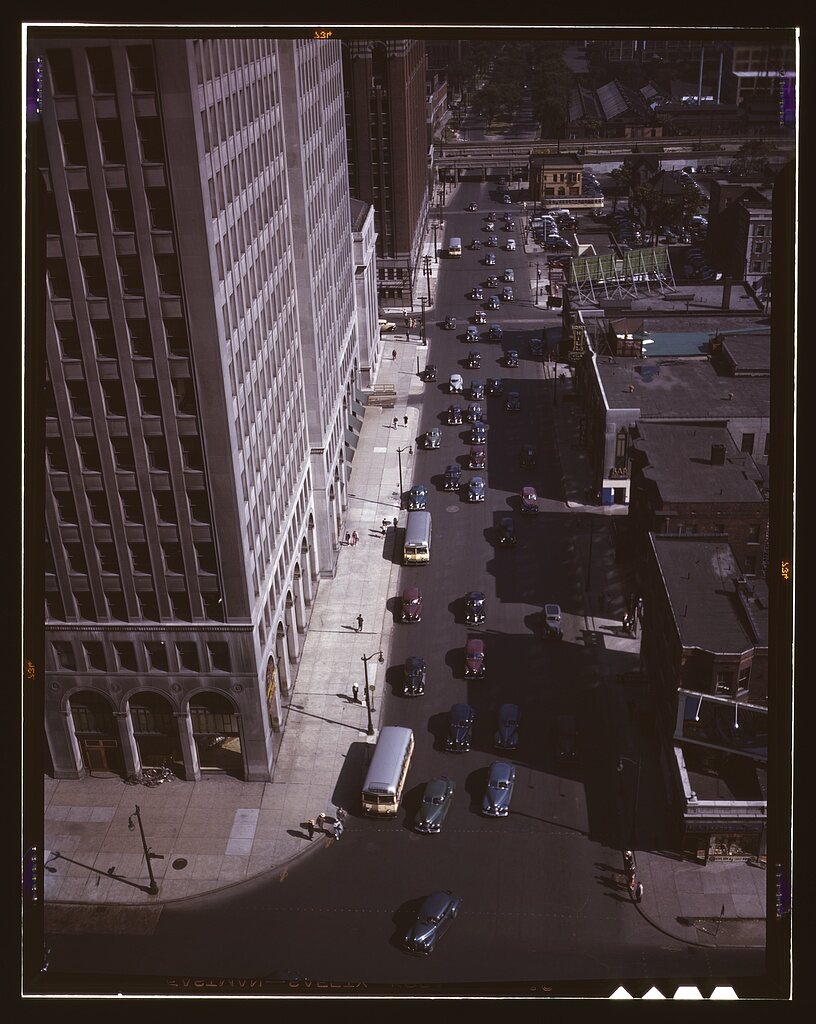
Historical crimes happened inside transportation systems. Accessibility, escape routes, automobile use, street grids, transit corridors, border geography, and commercial concentration can all matter when studying where and how an offense occurred.
REAL DETROIT SOURCE · Traffic at 5:30 on Second Avenue in Detroit, July 1942. Source record.MOVEMENT CONTEXT — NOT A CRIME SCENE.
RESEARCH LENS
Reading mobility as opportunity and constraint
Routes as opportunity and constraint
Automobiles and changing offender mobility
Commercial corridors and concentration of targets
Border and river access as geographic variables
Use maps to understand a case without giving away the book narrative
CONNECT THE CITY
Movement is context, not proof.
Routes, vehicles, transit, and border geography are used only where a documented case or period source supports their relevance.