An Indigenous homeland
Anishinaabe peoples lived in and cared for this region for thousands of years before the French settlement. The place carried Indigenous names, including Waawiiyaataanong—often translated as “where the river bends.”
EXPLORE DETROIT · ROOM 01
Detroit History
The river. The factories. The neighborhoods. The streets. The people who arrived, worked, built, policed, celebrated and changed the city.
MOVE THROUGH DETROIT ↓
BEFORE THE MOTOR CITY
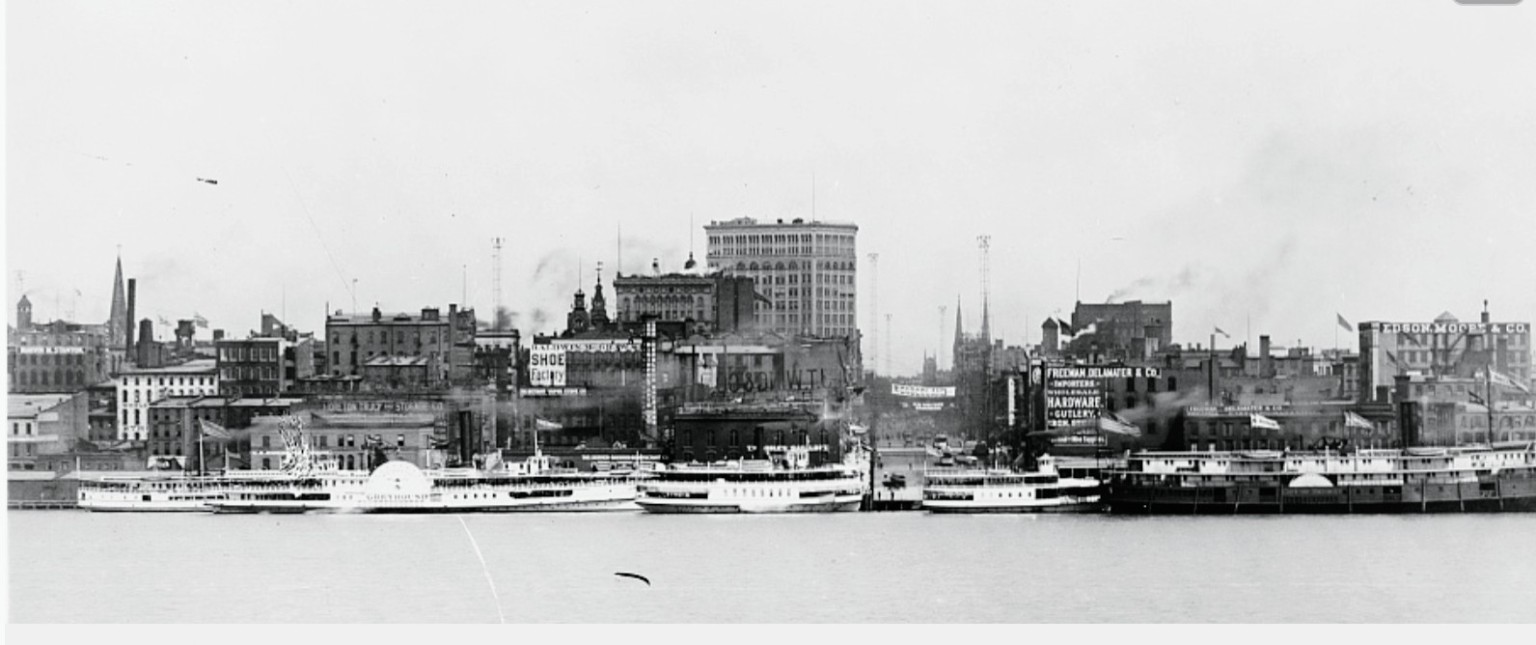
Long before factories and patrol cars, this was an Indigenous homeland and a strategic river passage. The city’s later streets, neighborhoods, border traffic and crime geography all grew from that location.
Anishinaabe peoples lived in and cared for this region for thousands of years before the French settlement. The place carried Indigenous names, including Waawiiyaataanong—often translated as “where the river bends.”
Antoine de la Mothe Cadillac’s expedition established a French settlement on the north shore of the Detroit River. The narrow passage offered access, trade and a defensible position between the Great Lakes.
Long, narrow farms gave many settlers access to the river. Some later Detroit streets followed their boundaries and retained the names of early landholding families.
The river shaped transportation, settlement and commerce. Generations later, the same border geography would shape factories, neighborhoods, policing, Prohibition and the routes followed throughout this website.
This section draws on the Detroit Historical Society’s histories of Detroit’s founding and ribbon farms.
OUR DETROIT FOUNDATION NOTES →OUR GEOGRAPHY NOTES →THE WORLD OF THE RALPH PALMER CHRONICLES
Here the city can be explored on its own terms while remaining connected to Ralph Palmer's life. The city is organized through its streets, buildings, transportation, newspapers, crime, policing and everyday life.
THE RIVER
Shipping, docks, Windsor, commerce, winter ice and the waterway that made Detroit a border city.
THE PEOPLE
Immigration, migration, working families, churches, neighborhoods and the communities that built Detroit.
THE 1920s
Rum-running, blind pigs, enforcement, organized crime and a river border transformed by illegal liquor.
THE STREETS
Streetcars, automobiles, bridges, traffic, storefronts and the expanding geography of the Motor City.
THE FACTORIES
Ford, Lincoln, Vickers, tool-and-die work, shift whistles, rail lines, smoke and steel.
THE 1940s
Wartime production changes the factories, the workforce and the city Ralph Palmer would return home to.
POSTWAR DETROIT
Growth, nightlife, housing, traffic, precincts, newspapers and the changing streets of the late 1940s and 1950s.
THE CHANGING CITY
Urban transformation, policing, industry and neighborhoods continue changing as Ralph's career advances.
THE RIVER
The river room covers commerce and freighters, Canada across the channel, docks, crossings, Prohibition-era smuggling and the physical geography that shaped the city.
EXPLORE THE RIVERTHE FACTORIES
Industrial Detroit connects the Ford, Lincoln, and Vickers worlds to neighborhoods, transportation, wartime production, and Ralph Palmer's own pre-police working life.
PROHIBITION DETROIT
Rum-runners, blind pigs, rackets and gangsters enter here only as part of the larger story of Detroit, its people and the police department charged with policing it.
THE CITY KEEPS OPENING
Neighborhoods, architecture, transportation, immigration, industry, nightlife and urban transformation each have their own path through the archive and the books.
DETROIT CONTEXT PATH
CONTINUE IN THIS CATEGORY