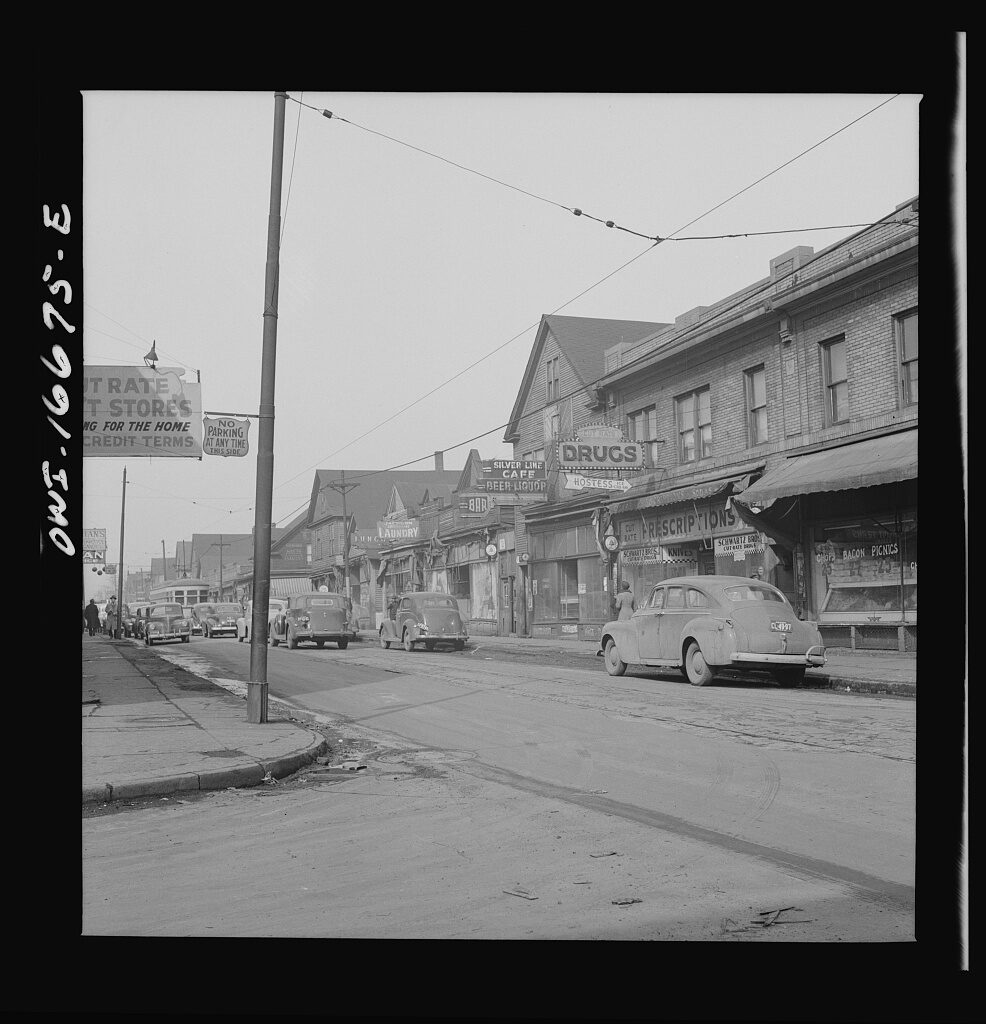
Source: Arthur S. Siegel / source record · Public domain — FSA/OWI
Crime does not distribute itself evenly across a city. A useful geographic analysis asks what activities bring people together, what targets are present, what guardianship exists, how visible a location is, and how easily someone can arrive and leave.
Residential blocks, factories, taverns, commercial strips, transit nodes, vacant property, and civic buildings generate different daily populations.
Shift changes, streetcars, buses, automobiles, foot traffic, bridge crossings, and arterial streets affect when places fill and empty.
Police presence is only one form. Employees, neighbors, lighting, crowds, building design, and hours of operation can affect visibility.
A criminological explanation of opportunity is not an accusation against a neighborhood. It describes conditions around an event, not the character of the people who live there.
Terms such as routine activity, hot spots, crime generators, and environmental criminology can help analyze historic Detroit retrospectively, but should be labeled as modern frameworks.
CONTINUE IN THIS CATEGORY