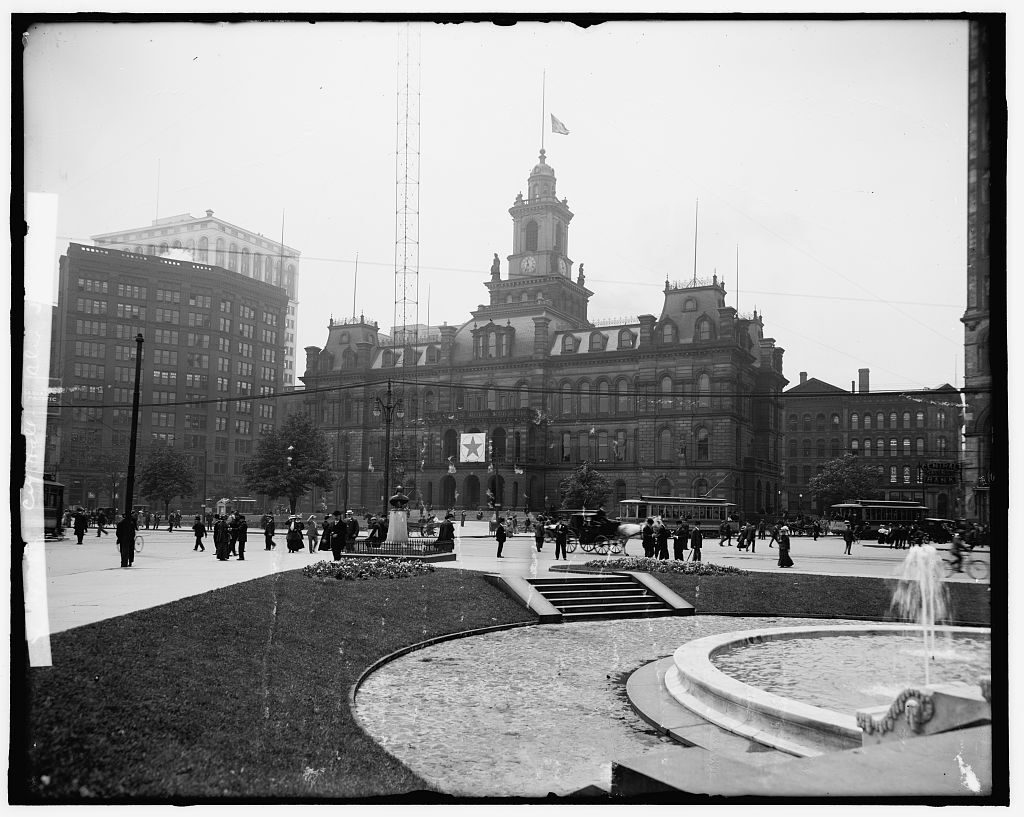
Source: Detroit Publishing Co. / source record · No known restrictions on publication
Detroit was governed through institutions that shaped policing, courts, streets, neighborhoods, infrastructure, public spending, and the daily life of the city. This room follows those institutions—not as abstract politics, but as forces that changed Detroit block by block.
This diagram is a navigation device, not a claim that Detroit government operated as a simple chain of command. The actual historical relationships changed over time and are documented from period records rather than inferred from this simplified diagram.
How municipal government was organized, how ordinances and budgets moved, and how elected officials shaped the city’s public institutions.
OPEN CITY HALL →The mayor’s office as a center of executive leadership, appointments, administration, public messaging, and political accountability.
OPEN MAYORAL FILE →Commissioners, command structures, bureaus, rules, personnel systems, and the institutional side of Detroit policing beyond the street officer.
OPEN ADMINISTRATION FILE →How police investigations entered a larger system of charging, prosecution, hearings, grand juries, trials, and public records.
OPEN JUSTICE POWER →Roads, expressways, housing, utilities, civic construction, redevelopment, and the public decisions that physically remade Detroit.
OPEN PLANNING FILE →Campaigns, turnout, public debate, neighborhood interests, civic organizations, and the political environment surrounding municipal decisions.
OPEN ELECTION FILE →How allegations of misconduct, reform drives, investigations, commissions, grand juries, and press scrutiny could challenge municipal institutions.
OPEN OVERSIGHT FILE →Newspapers did more than report crime. They covered elections, appointments, investigations, public spending, civic disputes, and the reputations of institutions.
OPEN PRESS LENS →Minutes, ordinances, reports, budgets, personnel records, court records, hearings, and other surviving documents that let historians reconstruct municipal Detroit.
OPEN RECORDS ROOM →This section is designed to distinguish documented municipal structure, policy, investigations, and public records from rumor, retrospective legend, or partisan interpretation. Specific claims about officeholders, misconduct, political alliances, or institutional responsibility should be tied to reliable historical sources.
COURTS & JUSTICEDETROIT PRESSDETROIT POLICEDetroit government, municipal history, police administration, planning, elections, public records, investigations, and institutional change can be explored deeply. When those subjects overlap a Ralph Palmer case, the website supplies context and archival proof without revealing the complete investigation or narrative outcome.
CONTINUE IN THIS CATEGORY