THE BUSINESS BEFORE THE RACKET
A struggling trade created an opening.
Detroit's professional cleaning industry entered the mid-1920s under pressure. Businesses competed by holding prices down, while unpaid accounts and customers shifting among cleaners made the market difficult to stabilize. Organizing the trade and establishing common prices could be presented as a business solution.
The Wholesale Cleaners and Dyers Association emerged in that setting. Historical accounts identify Charles Jacoby Jr. as its president and connect him through family ties to Abe Burnstein, one of the brothers at the center of the Purple Gang.
THE METHOD
Membership backed by fear.
According to the historical record, association dues did more than support an industry organization: they helped finance Purple Gang activity and operated as protection against violence. Businesses that resisted faced harassment and property damage. Accounts include stink bombs, broken windows, assaults and dynamite left as warnings.
ESCALATION
Bombings and killings.
On October 26, 1925, the Novelty Cleaners and Dyers Company and the Empire Cleaners and Dyers Company were bombed in separate attacks. Historical accounts also connect the murders of outspoken opponents Sam Sigman and Samuel Polakoff to the conflict. This page does not assign an address, route or individual attacker where the sources reviewed here do not establish one.
THE 1928 CASE
Charges without convictions.
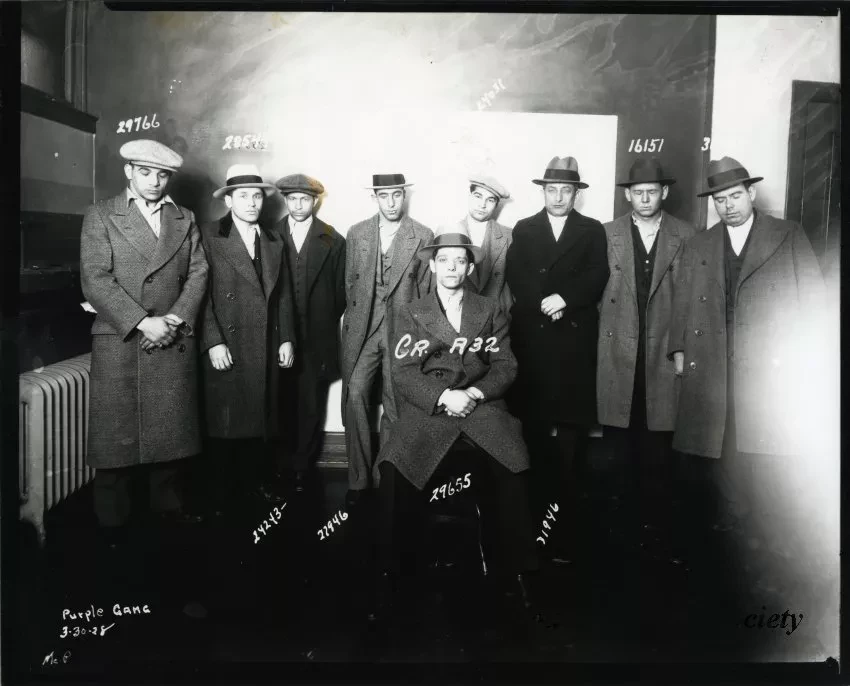
Charles Jacoby Jr. and twelve alleged Purple Gang members were charged with conspiracy to extort money. All thirteen defendants were acquitted. The trial ended the period remembered as the Cleaners and Dyers War, but the organization entered a broader period of influence in Detroit's underworld.